
It started with one book, for one little girl.
The origin
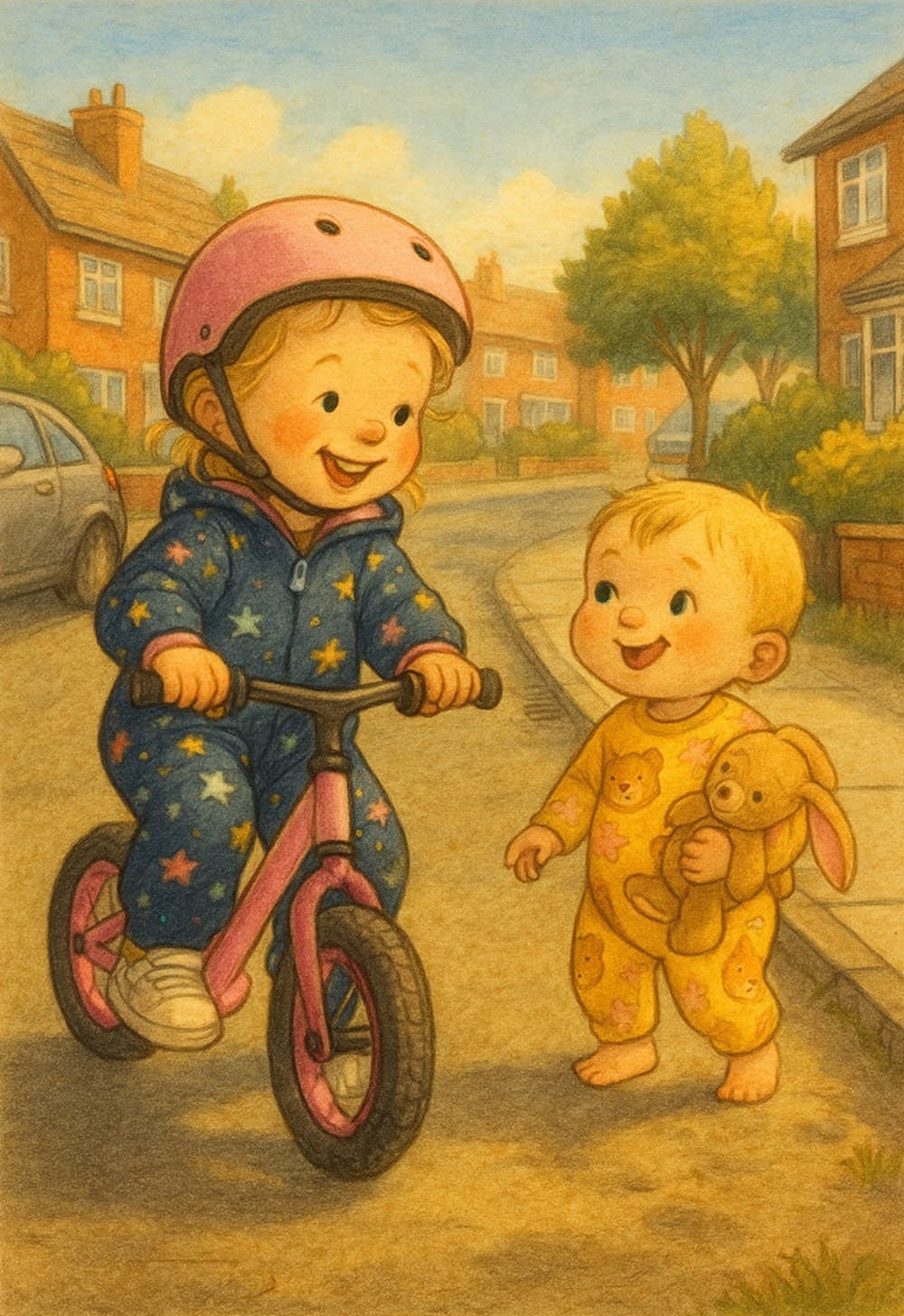
In July 2025 I made my daughter a storybook.
Not bought — made. I sat up after bedtime feeding photos into an AI image tool, generating a page, hating it, generating it again. Then writing the words around whatever came out. It took an entire weekend and a great deal of swearing, and the finished thing was held together with more hope than craft.
She loved it. She made us read it eleven times.
That was the whole idea, really. Every child wants to be the hero of the story. Most books can only offer them a name printed on the page.
What I couldn't stop thinking about was how hard it was. I'm an accountant, not a developer. If it took me a weekend and a lot of stubbornness, nobody else was going to bother — and every family deserved the version my daughter got.
So I taught myself to build it.
What we built
MyLittleStories does in minutes what took me a weekend: you upload a photo, we create an illustrated character from it, and that character stars in their own storybook — the same face on every page, in a proper watercolour style, with a story written around them.
Three kinds of story, because children need more than dragons:
- Themed adventures — pirate treasure, space missions, and whatever else they've decided they're doing this week.
- Real life — the actual days worth keeping. First bike rides, seaside trips, muddy-puddle Sundays.
- Big moments — starting school, a new baby, the big changes that are easier to face when you've already been the brave one in a book about it.
How much has changed
The tools I used in 2025 were remarkable and also quite bad. Faces wandered between pages. Hands were a lottery. Getting the same child to appear twice in a row was genuinely difficult.
Here's the honest comparison:
July 2025
Today
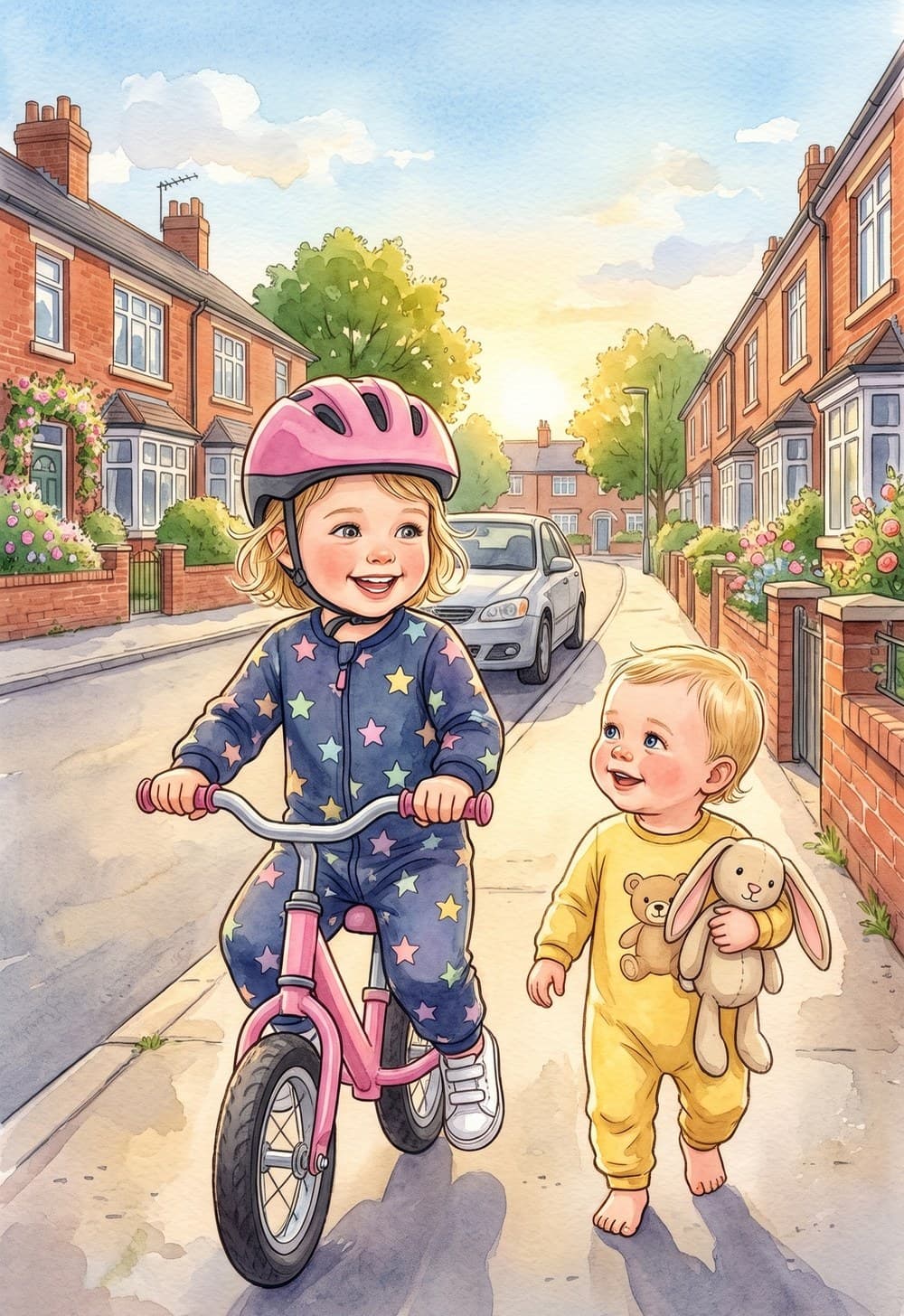
They have improved enormously, and they keep improving. We rebuild our pipeline whenever something better arrives — better consistency, better likeness, better hands. A book you make next year will be better than one you make today, because we'll have replaced half the machinery underneath it by then.
Here's what that means for you, plainly:
We're making an illustrated character, not a photograph. Your child's photo shapes who the character is — their hair, their colouring, the shape of their face — and then an illustrator's eye takes over. The result should look like them, drawn. The same way a good portrait painter isn't competing with a camera.
That's deliberate. A photorealistic child pasted into a watercolour world looks wrong, and children don't want to look at themselves — they want to look at the hero. The character in the book is your child the way they'd be drawn in a story: a bit rounder, a bit braver, with better outfits.
And if a book isn't right, we'll sort it. You can regenerate images you're not happy with, and if something's genuinely wrong, tell us.
What we won't do
Your child's photo is used to create the character and then deleted — we've no reason to hold onto it once the drawing exists, and plenty of reasons not to.
That was the first thing I decided, before a single line of code. I was uploading pictures of my own daughter. I knew exactly how I'd want that handled.
Now
Books are printed in the UK. Hardcovers come from a proper book printer, not a photo lab. The stories are written fresh for each child, not assembled from templates.
It's still me, mostly. Which means when you email, I'm the one who replies.
There are three of them at home now — and the youngest, a baby boy, has started appearing in recent books whether he likes it or not.
— Rob Clarke, Founder
(and, more importantly, dad to the girl who made us read it eleven times)